home
Blog
Showing posts with label Quipus. Show all posts

Thursday, 21 March 2019

 ' Home coming', 2018


I will be joining a fab collection with eighteen wonderful artists at 
Cabinet

I'm so delighted to be a part of this collection as it has given me the opportunity to consider how to display my work connecting weaving, performative walking and storytelling in a Gallery space. With thanks to Jenny Timmer for the invitation and also the inspiration.


curated by Jenny Timmer

at Espacio Gallery from  April 9th - 14th


I'd love to see you at the PV on Thursday April 11th , 6 - 9 pm, pop in and see what is in the collection at Cabinet !

Thursday, 21 February 2019

A Walk for Terminalia with Thread and Word. 23/02/2019 
(for more about this walk please see previous blog postings.)

sumak kawsay’*


This photo taken at Reculver , during a walk on Wednesday.
 A Playlist


Woody Guthrie - Waiting at the Gate : youtube.com. https://binged.it/2GQ2FJQ 
Carlos Valera: Muros y Puertas: https://www.youtube.com/watch?v=D-10VQQtAnw


Nina Simone : Here Comes the Sun. https://youtu.be/NJiC6cA3dUA


Cat Stevens/Yusuf “where do the children play” 
where do the children play
(contributed by Virginia Fitch)


Happy listening!


Here a pencil weave drawing of part of our route 


* Sumak kasway (quechua) “ ‘goodliving’ and interculturality….centred in the indigenous world view ,.. it aims to overcome the Western model of individualist thought and the dominant concept of development centred in the market” Interview with Pablo Sanaguano, Maria Fernandez Cartagena

Monday, 18 February 2019

A Walk for Terminalia with Thread and Word - Some context for our walk .

This walk takes place February 23rd in Seasalter, on the Kent Coast.

http://terminaliafestival.org you can check the festival out and find us under events.


Inti
As I prepare for this walk with Thread and Word there are some  connections that I have made over the last week that have contributed to my thinking about this walk that I thought would be worth sharing.  I mostly carry these ideas around in my head and have found that writing these ideas down does clarify my thinking as I try to explain them. Although I have to admit some ideas are a leap of faith and associated with feelings you carry in your heart as you will no doubt gather if you read this.


The first has been connecting my thoughts about the solar panels proposed for the landscape in Seasalter with the  Inca deity' s  Inti, the God of the Sun, and Mama Pacha, Mother Earth . I was born in Bolivia and grew up in Lima, Peru. At school we learnt about the Incas probably in the same way as children in England learn about the Romans. So I tend to draw on this bank of knowledge using the mythic method, a method identified  by TS Eliot and James Joyce, which draws on myth from the past as a way to help us connect with the present.


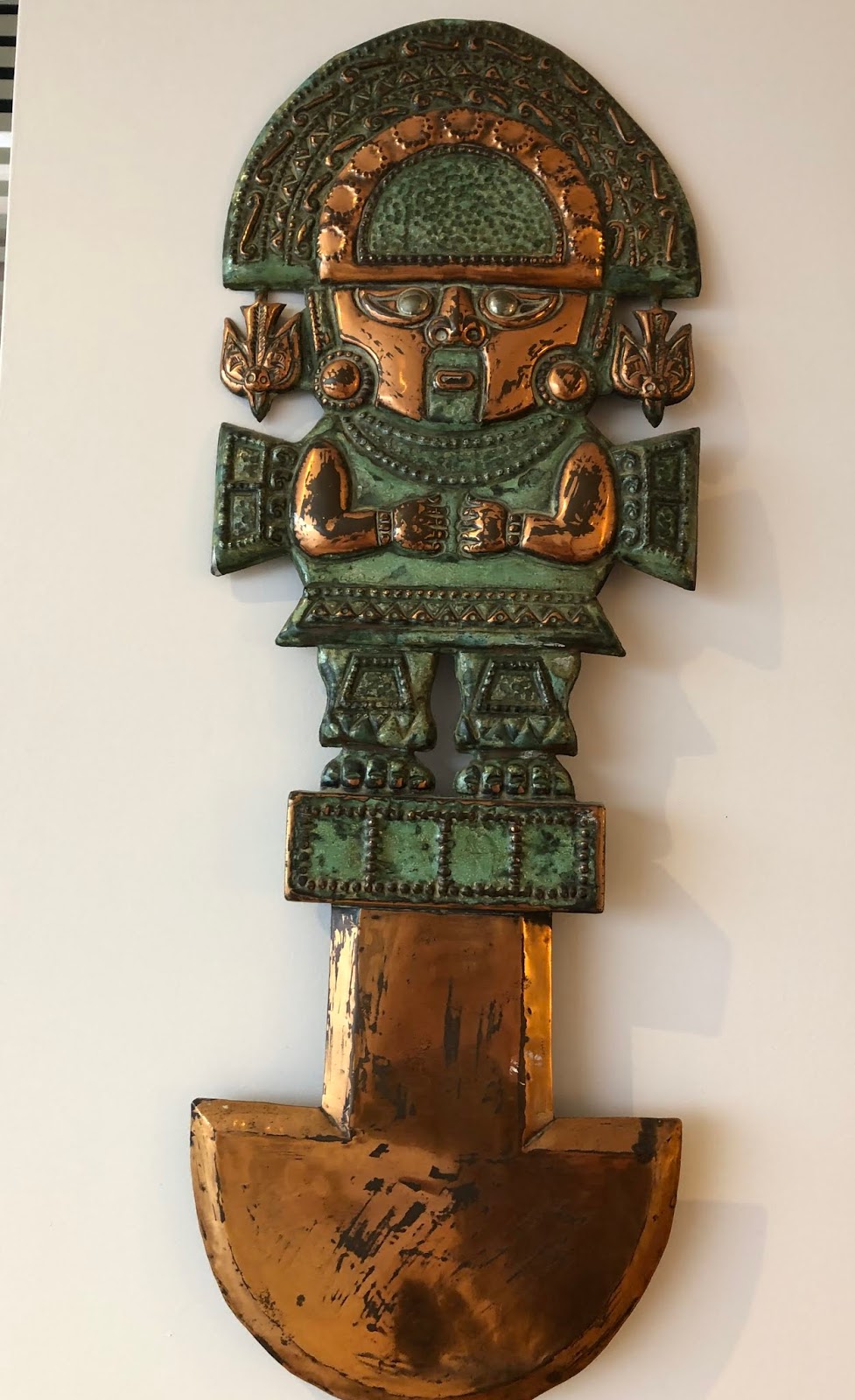
Today I walked in Seasalter and thought about how important it is to feel this connection with the earth and the sun. In Peru there are no figures for Mother Earth (Mama Pacha), aside for those made to sell to tourists, as Andean people believe she can be felt in every place, at every moment and in every living being.  Where do the thousands of solar panels proposed for this site fit in to this scenario, I wonder?


Andean people still believe strongly in the importance of living in harmony with nature and not taking too much from Pachamama. How will Mother Earth change if the rays of the sun are diverted from the land and harnessed as energy ? I am not against a greener energy but as I walked I wondered how much energy do we really need? Should we reflect on our role as consumers ? Where are the boundaries to our consumption?


There are ten of us walking to celebrate Terminus, the Roman God of boundaries. We will be reading poetry, listening to music and meditatively knotting ropes. I have made the ropes for this walk by hand in my studio , they are in the photo on the right.

This practice also derives from my knowledge of the Incas and the records that they kept through a system of knotted ropes called Quipus. To this day the village members, who are trained in their roles as  Quipucamayocs in villages in the Andes, are able to read the knotted ropes that our text based society is unable to translate. Although there are theories and explanations offered by researchers and anthropologists there is still a mystery in the artefacts which I love.


We will reflect on our thoughts at the end of the walk when we attach our knotted ropes to our Vara ( Pole) . Below is the Vara I have made for this walk with a strap that I have woven on an inkle loom . The weave is symbolic of the land we will be walking around and I will explain this on the walk.

A Vara for Terminalia


This Vara (Pole) will then join the collection of 12 Varas in my studio.I have been leading walks and assembling these Varas since 2015.  Each Vara holds the ropes knotted as a record of a particular walk which I have led supported by friends, academics and artists.


I would like to thank all those who are joining me on this walk and giving their support in making the Vara contributing to an exchange of ideas, meditative knotting and poetry writing in the pub at the end. This is the first time we will take the Vara on the walk with us and then put the ropes on to the Vara together as a group. I usually take the ropes back to my studio and then assemble it there on my own. I think it will add to the ritual of the walk and am looking forward to seeing how this develops.

I am hoping that our poetry writing will be taking a leaf out of ecopoetics as described by the founder of the ecopoetics journal Dr Jonathan Skinner (Warwick University)  who will be joining us on this walk. We will be locating our poem in and through  the 'site' rather than kinds of 'writing':

"Taking writing out of the classroom, the bookstore and the library even out of the book itself shifting the focus from themes and styles to an institutional critique of green discourse itself  and to an array of practices converging on the oikos, the planet earth that is the only home our species currently knows"(1).

 I'm looking forward to seeing what we come up with.

Looking forward to celebrating Terminalia with you all on Saturday!


(1) https://jacket2.org/commentary/jonathan-skinner

Saturday, 9 February 2019

A walk for Terminalia with Thread and Word.

On February 23rd in Seasalter, on the Kent Coast.

http://terminaliafestival.org you can check the festival out and find us under events.


By way of an explanation, we will be celebrating Terminalia with Thread and Word in Seasalter through a walk with poetry readings ( you are welcome to bring a contribution) .

Apart from walking we will engage in the meditative knotting of ropes. I will supply the ropes.


Our intention is to explore the liminal space that surrounds us .


In Seasalter.there is a proposal to cover the area we will be walking with 1.000’s of solar panels as tall as double decker buses . The area we are walking in is shown in the photo on the right.


The word liminal comes from the Latin word limen, meaning threshold – any point or place of entering or beginning.


A liminal space is the time between the ‘what was’ and the ‘next.’ It is a place of transition, waiting, and not knowing. Liminal space is where all transformation takes place, if we learn to wait and let it form us.


The act of walking and knotting ropes will allow us to think about where we are now and how our world might be transformed .


We will also be reading some poetry and you are welcome to bring your own contribution if you so wish.


We will document this experience on a Vara or pole , as shown in the photo on the left.

I have made the weave for our Terminalia Vara . Seen on the right. and it is an attempt to map the terrain. (I will give you my account of this on the day).


We will be attaching our ropes to the Vara at the end of the walk ( in the pub 😊) .We will also use the ropes and the knots to order our thoughts in an attempt to write a poem, also in the pub!

Looking forward to walking and sharing this experience with some of you on February 23rd.

The walk is free but numbers will be limited and you are advised to book.
For tickets: https://www.eventbrite.co.uk/e/a-walk-with-thread-and-word-for-terminalia-tickets-55854732007

Wednesday, 3 October 2018


A Walk with Shrines

A photo Diary of Ofrendas made by artists/makers for 

'Madonna of the Mountains' by Elise Valmorbida


 Photography by Anastasia Miller
Work in progress Sharon Rowe
The work made by Sharon Rowe was completed and is included in  the film made of the event on the day.

Please see the link to the film at the bottom of the page.

Maggy Rodd's journal quilt using shopping receipts


Milagros, Sonia Overall
Using our eyes and our legs as we walk to set up our
Shrines. 
The site
Deb Jacksons small folded book of 16 panels.

Sara Trillo ,' the bone' as noted by Elise Valmorbida


With thanks to Elise Valmorbida for supporting.


A Walk with Shrines was part of Margate Festival 2018:Now, which was funded by Turner Contemporary, Dreamland and Kent County Council.


Here video of the Ofrendas and explanations by the artists, with thanks to Anna Bowman, made with the support of Arts Council England


A WALK WITH SHRINES from Anna Bowman on Vimeo.


Tuesday, 11 September 2018

Weaving the walk

@  #4Wcop  (the Fourth World Congress of Psychogeography)


A fab invitation from Sonia Overall, to become her Ariadne, led me to 4Wcop in Huddersfield on the 7th and 8th of September .

Huddersfield canal , I love a houseboat!


 Here are some images of the Vara* weaving the experience of Treading and Threading the Labyrinth.

(* Vara  a staff of office which illustrates a semiosis that is very different from "writing proper"- as described by Frank Solomon in The Cord Keepers)


The Vara holds the ropes which I make by hand in my studio which are then knotted by fellow walkers who then return the ropes to me so that I can create a record of their participation in the walk.

Each of these varas has woven into it the ropes from particular walks I have led over the last four years. More about these can be found on my website and in previous blog postings.


The Story for #4Wcop

We had 16 walkers from the World Congress who came to Slaithwate (Slawit) to walk our  textile Labyrinth, made by hand in the beautiful Colne Valley.

The textile Labyrinth had particular significance as the valley used to be the site of rows of textile mills, all pumping smoke into the air (no trees grew due to the acid rain)  and dye into the river which flowed past our site.

materials from the Work and Play Scrapstore 


It seemed fitting that some of our textiles for constructing the Labyrinth had been gathered from  The Work and Play Scrastore , and recycled into our Labyrinth.

I reflected on this as we heard about the history of the area from Michael who, with Helen, welcomed us at Slaithewate Forest school .


With thanks to Helen for wonderful warming cups of tea and also sharing her knowledge of the aboriginal art of making rope.


The Baltic wheel  Labyrinth,  with vague terrain obstructions as designed by Sonia Overall.


Much measuring calculating and designing was followed by a quick assessment of the site and the joy of working with the terrain. We loved those trees almost waiting for our labyrinth to be installed


With thanks to all who attended and walked with us and in particular the Congress Central Committee.

Margate Bookie and The Margate Festival 


 I am now looking forward to taking our #4Wcop Vara , along with nine other Varas from previous walks over the last four years, to our Thread and Word performative walk "Walk with Shrines" on September 29th detail are on  Margate Bookie Program .


Free but ticketed on eventbrite:Walk with Shrines, tickets


Sunday, 29 July 2018

Beyond The Pedestrian: Walking in Research, Theory, Practice and Performance.

26th July 2018 Dept of Geography and Planning, The University of Liverpool

I was delighted to have my abstract accepted for this conference  organised by Dr Morag Rose, who leads the wonderful loiterers resistance movement in Manchester.
http://thelrm.org/index

Three of us presented work under the title , Walking Environments and Performance: 


Jess Allen, ArtistDrop in the ocean: on walking with water as eco-activist performance 


David Shannon and Sarah Truman, Manchester Metropolitan UniversityQueer the landscape: Walking-songing-researching from Melrose to Lindisfarne


Elspeth (Billie) Penfold, ArtistThread and word


 Here links to their work:


Jess Allen
https://www.escholar.manchester.ac.uk/api/datastream?publicationPid=uk-ac-man-scw:223621&datastreamId=FULL-TEXT.PDF

David Shannon
https://www.davidbenshannon.co.uk

 I gave an introduction to walking and Thread and Word and will be adding the copy of my talk to my website in due course.

With thanks to all who listened and knotted at the conference. Please see photo on the right. Great knots!

A Vara walking in Margate

 Your knots will be turned into a Vara recording the experience of meeting and talking to you at 'Beyond The Pedestrian'.


I also received another walking Library badge  (see above) from Professor Dee Heddon,  from her Walking Library for a Wild City with Alec Finlay. I have a knotted rope which will be added to the Vara archive together with the badge!

for more about The Walking Library for a Wild City , http://wildcityglasgow.blogspot.com

Keynote Speaker at Beyond the Pedestrianr: Professor Dee Heddon, University of Glasgow


Beyond The Pedestrian, with thanks to Morag Rose for organising an inspirational conference
A photo posted on twitter before the conference by Dee Heddon 

A one-day interdisciplinary event focused on walking research, practice and culture. Our definition of walking is welcoming to all kinds of bodies and includes orthotics, sticks, wheels and other assistive technologies. Subjects covered may include, but are not limited to:

Walking interviews and other pedestrian research tools
Creative walking, walking art and pedestrian performance
Past, present and future psychogeographies
Walking to critically engage with and understand our environment
Walking as a political, activist or community building tool
Ethical conflicts, barriers, issues and debates around walking research
Access, participation and the privilege of walking as choice
Research into, and around, pedestrian policy, planning and promotion
Walking across and between academic disciplines
Walking for leisure, education, health, tourism or exploration


I am now preparing for and looking forward to : 

 The upcoming 2018 Fourth World Congress of Psychogeography in Huddersfield in September, when I will be collaborating with Sonia Overall , Threading and Treading the Labyrinth http://4wcop.org/#eventsreading